


The 2026 Reality Check
You probably think your privacy settings from two years ago still work. They do not. We live in a 2026 where autonomous scrapers do not just wait for you to post; they predict your next move based on the metadata your smart fridge leaked while you were making coffee. The digital footprint you leave today looks less like a trail and more like a high-definition 3D model of your entire existence. If you haven’t updated your personal security protocol this year; you are basically broadcasting your life on a billboard in the middle of a crowded digital bazaar. This guide focuses on reclaiming that space. We are moving past simple password managers. We are talking about noise injection, biometric obfuscation, and the tactical use of ephemeral identities.
The Rise of Autonomous Scraping
By now, every major platform uses agents that crawl the web with a level of sophistication we didn’t see in 2024. These tools don’t just look for text. They analyze the cadence of your typing, the specific way you crop your photos, and even the background noise in your voice notes. People in tech circles call this ‘Identity Harvesting.’ You might feel safe because you use a VPN. A VPN only hides your IP address. It does nothing to stop a scraper from identifying your unique browser fingerprint. In 2026, your hardware is your snitch. Every sensor on your phone provides a data point that scrapers use to build a permanent profile. You need to break that chain of data immediately.
Hardening Your Mobile Device
Your smartphone remains the primary leak in your digital hull. Whether you use a high-end Android or the latest iPhone; the factory settings prioritize convenience over your safety. Start with the ‘Sensor Access’ toggle. Most users leave this on for every app. You should disable it globally and only enable it when you actively need to take a photo or record audio. In 2026, apps use the accelerometer to track your gait. Your walk is as unique as your fingerprint. If an app knows how you move; it knows who you are even if you use a burner account. Go to your privacy dashboard now. Revoke motion and fitness permissions for every app that does not require them for its primary function.
Next, we address the ‘Ephemeral ID’ feature. If you aren’t rotating your device identifiers every forty-eight hours; you are making it too easy for trackers. This is the 2026 version of clearing your cookies. Both major operating systems now include a hidden menu for randomized ID generation. Set this to ‘High Frequency.’ This ensures that the ID an advertiser sees on Monday differs from the one they see on Wednesday. It breaks the longitudinal data collection that companies use to predict your buying habits or your political leanings. It feels like a small step. It is actually the difference between being a person and being a data point.
The Indian Tech Context: The UPI and WhatsApp Trap
I see this constantly in our community. We are the most connected group of people on the planet. We live on WhatsApp and we pay for everything with a quick scan of a QR code. This creates a massive vulnerability. In India, your phone number connects to your bank account, your Aadhaar, and your food delivery apps. If a scraper gets your number; they have your life. You must stop using your primary number for public-facing services. Use a secondary digital SIM for all your delivery and shopping apps. In 2026, the cost of a secondary data-only plan is negligible. The cost of a hijacked identity is not. If you are sharing screenshots of payment confirmations on family groups; stop. Those images contain transaction IDs that scrapers can use to map your spending patterns. Keep your financial data in the banking app and nowhere else.
Noise Injection: The New Defense
Defense in 2026 requires more than just hiding. You need to create noise. Noise injection involves using tools that generate fake browsing traffic in the background. While you read this article; a noise injector should be ‘clicking’ on random links, searching for mundane topics, and ‘watching’ videos you would never actually view. This creates a smog of data that makes your real interests impossible to isolate. AI scrapers are efficient. They look for patterns. When you inject noise; you break the pattern. Several reputable open-source extensions now handle this on the fly. They consume minimal bandwidth but provide a massive layer of obfuscation. This is the 2026 equivalent of wearing a mask in a crowd of facial recognition cameras.
Biometric Obfuscation and Deepfakes
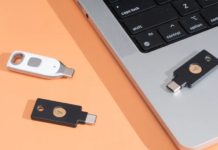
We have reached the point where your face and voice are no longer secure keys. A thirty-second clip of your voice from a social media post is enough for a bad actor to clone it and call your parents for money. You must treat your biometrics like a public key, not a private one. Never use voice-based authentication for banking. Switch back to hardware-based security keys. A physical Yubikey or a similar FIDO2 device is the only way to ensure that a deepfake cannot compromise your accounts. If an app asks for your face to unlock it; think twice. Use a long, complex PIN instead. It is slower. It is also much harder to steal via a remote scraper. In 2026; physical presence is the only true proof of identity.
Managing the Smart Home Leak
Your smart home is a goldmine for data harvesters. Your smart lights know when you are home. Your smart speaker knows when you are arguing with your partner. Your robot vacuum creates a map of your house that is often stored on a server in a jurisdiction with no privacy laws. If you cannot flash your smart devices with local-only firmware; you should keep them on a separate VLAN. This ‘guest network’ approach prevents a compromised lightbulb from seeing the data on your laptop. Many of you are still using the default router settings provided by your ISP. This is a mistake. ISPs in 2026 are essentially data brokers who happen to provide internet. Buy your own router. Use a local DNS provider that strips tracking pixels at the network level.
Social Media: The ‘Lurk Only’ Strategy
The era of over-sharing ended around 2024 for anyone who cares about their future. If you must use social media; adopt a ‘Lurk Only’ strategy. Do not like posts. Do not comment. Do not participate in polls. These interactions are signals that AI models use to categorize your psychology. If you want to see content; see it without leaving a footprint. Use third-party frontends that don’t require an account. If you feel the urge to post a photo of your meal; wait twenty-four hours. This breaks the real-time tracking that allows scrapers to pinpoint your location. Even better; strip the EXIF data from every photo before it leaves your device. Most modern phones have a setting to do this automatically. Ensure it is turned on.
The ‘Forget Me’ Automation
In 2026, manually deleting your data is impossible. There is too much of it. You need to automate your right to be forgotten. Several services now exist that automatically send ‘Delete My Data’ requests to brokers on your behalf. These tools use the updated privacy laws of 2025 to force companies to purge your records. Set these services to run every quarter. It’s like a digital deep-clean for your soul. You will never get everything; but you can make your profile so thin that it isn’t worth the compute power to track you. A thin profile is a safe profile.
Hardware Keys and Local Storage
Cloud storage is convenient; but it is also a giant target. In 2026, ‘The Cloud’ is just someone else’s computer that an AI is currently scanning. Move your most sensitive documents to a local NAS or an encrypted external drive. If your tax returns and medical records live in the cloud; they are eventually going to be part of a data breach. It is not a matter of if; it is a matter of when. Use the cloud for things you don’t mind losing. Keep your life on hardware you can touch. This shift back to local storage is the biggest trend among the tech-elite this year. They know that once data leaves your local network; you no longer own it.
The Future of Privacy
The battle for privacy is no longer about hiding from the government. It is about hiding from the algorithms that want to sell you things or manipulate your behavior. The tools are getting smarter; but so are we. By implementing these steps; you move from being a victim of the 2026 data economy to being an active participant in your own security. You don’t need to live in a cave. You just need to build a better wall. The digital world is still a great place to be; provided you are the one holding the keys to your identity. Stay sharp; keep your firmware updated; and never trust a default setting. That is the only way to survive the 2026 tech landscape without losing yourself in the process. We will look back at this era and wonder how we ever lived so exposed. Until then; keep your data close and your noise injectors running. It is the only way to stay invisible in a world that never stops looking at you.